
Queen Elizabeth II Garden
The garden is located in the heart of Regent’s Park, tucked behind the Espresso Bar on the Broad Walk and metres away from the Avenue Gardens.
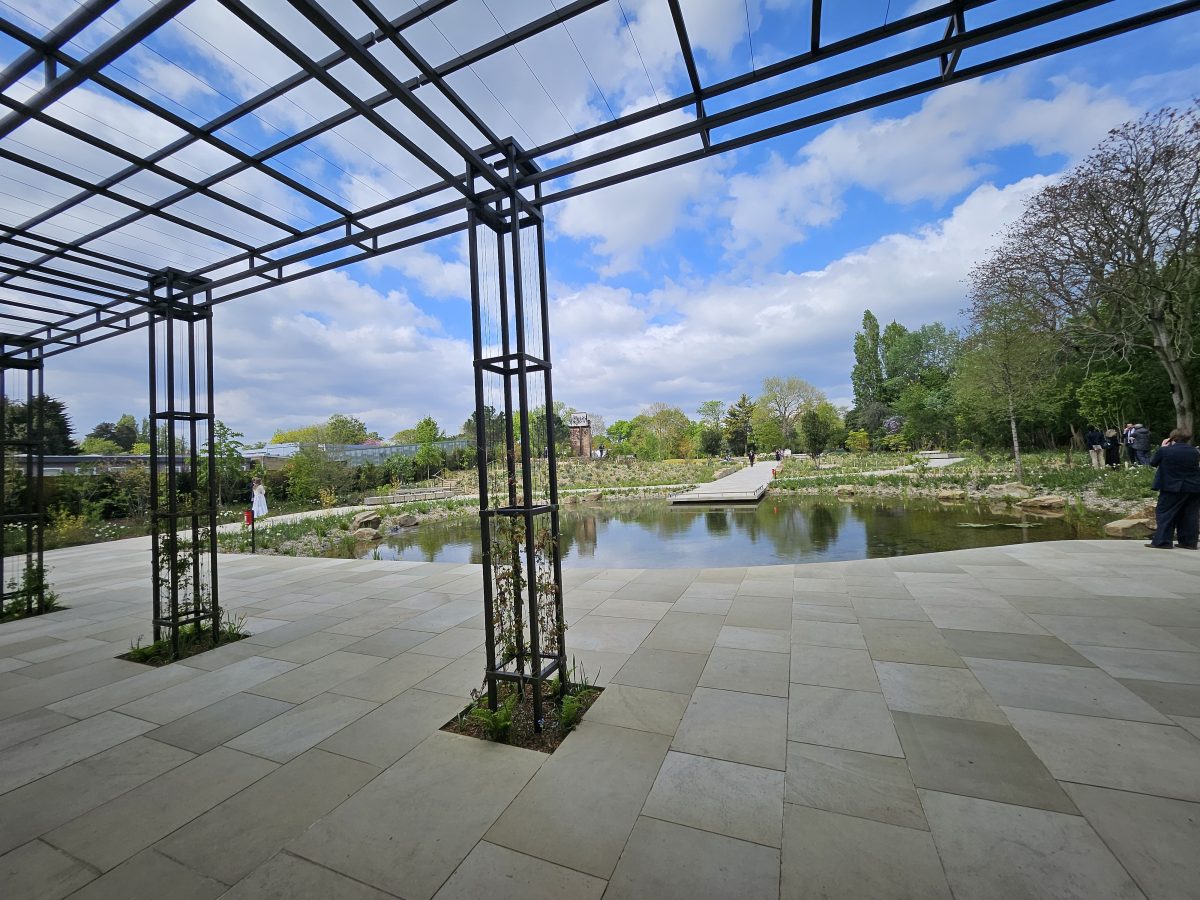
At the southern main entrance, visitors are greeted by a large pond complete with seating and a pergola. The central promenade is bisected by a meandering path which leads visitors through a series of beautiful landscapes.
A network of small-scale informal paths allows visitors to wander through the planting and explore the garden further.
The plants chosen for the garden are wildlife-friendly and designed to create vibrant year-round horticultural display. Many of the plants have a direct connection to Queen Elizabeth II and the places she loved. Lily of the valley – which featured in Her Majesty’s coronation bouquet – grows alongside Narcissus ‘Diamond Jubilee’ and Tulipa ‘Royal Celebration’. Myrtle, rosemary, oak and Maackia amurensis all carry royal or personal associations.
More than 40 new trees have been planted, each selected to complement the garden, to be climate-resilient and to provide food and habitat for wildlife. Specimen trees from Commonwealth nations take their place alongside native species.
Key Features of the Garden
- The water tower and its ornate metalwork representing the Four Nations
- Grand roundel with inscribed stonework
- The pergola which reuses metal from the original glasshouses
- The Pond and its aquatic plants (Nuphar lutea and Nymphaea alba)
- Tulipa “Royal Celebration”
- Lilies of the Valley
- Narcissus “Diamond Jubilee”
Meandering paths
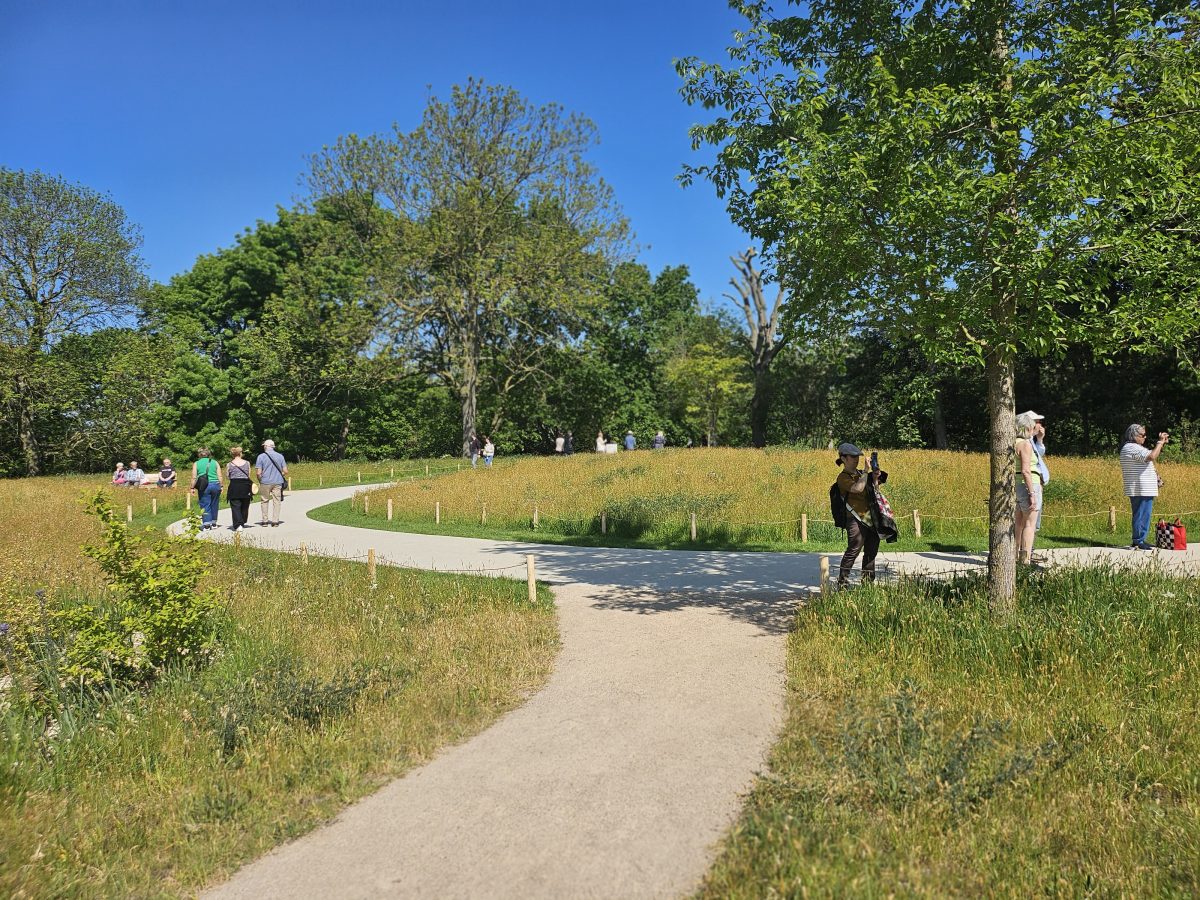
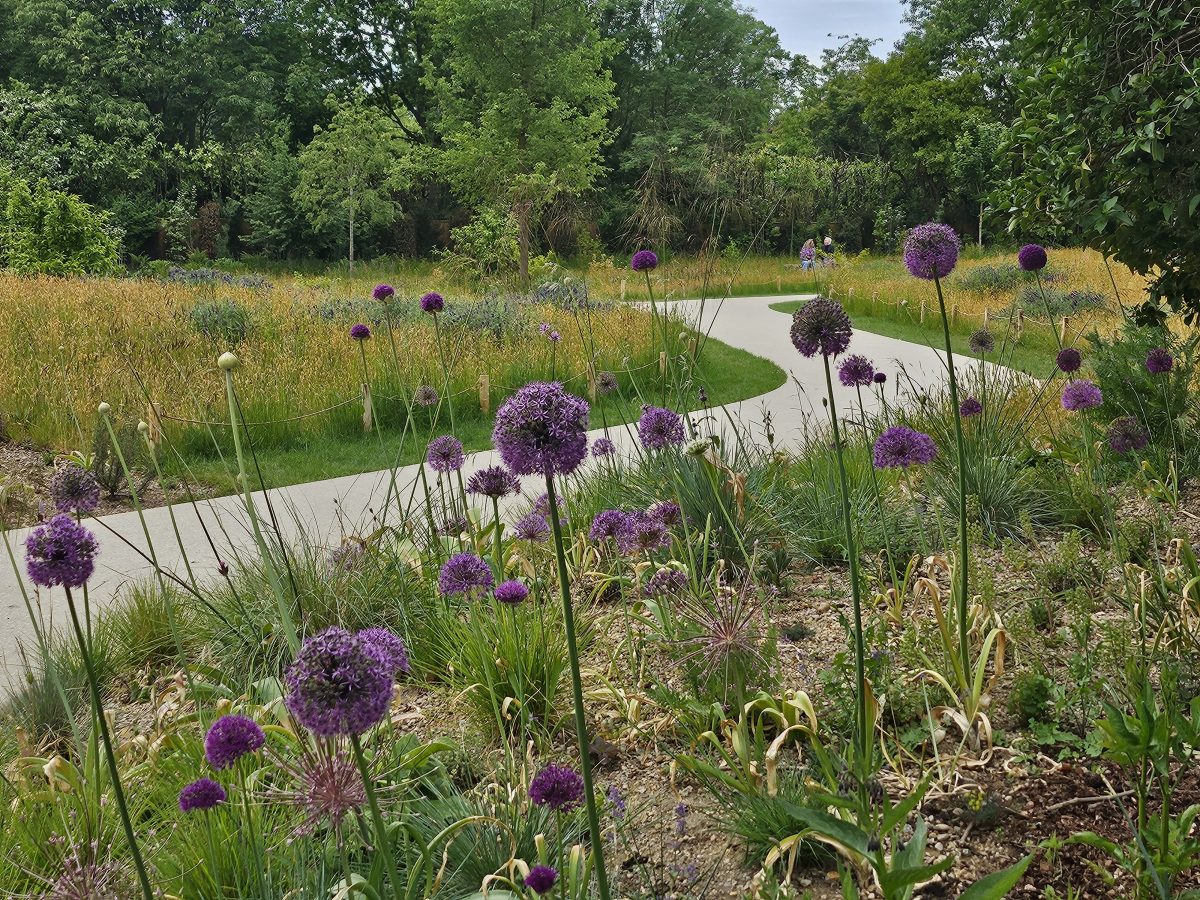
The path curves around gravelly banks planted with species adapted to our changing climate, and in early summer it comes alive with swathes of vivid purple alliums — their bold, globe-shaped blooms rising above the grasses and meadow planting on either side. As the path branches and turns, subtle shifts in texture underfoot reinforce the sense of a life gently unfolding.
This is a path made for unhurried exploration. Whether you follow it all the way through or pause to watch a bee among the flowers, it captures something of the garden’s quiet spirit — a living landscape that grows more beautiful with every visit.
Commonwealth Pergola
Standing at the southern entrance to the Queen Elizabeth II Garden, the Commonwealth Pergola is one of the garden’s most striking and meaningful features. Its 56 steel beams each represent a member nation of the Commonwealth, making it a quiet but powerful tribute to the global community that defined so much of Queen Elizabeth II’s reign.
The pergola is also a testament to thoughtful, sustainable design — its steel was salvaged and repurposed from the glasshouses that once stood on this very site, giving new life to materials with their own history. In time, the structure will be softened and transformed as wisteria weaves its way through the beams, turning it into a fragrant, flowering canopy.
Whether you pause here to take in the view over the circular pond, or simply pass through on your way into the garden, the Commonwealth Pergola offers a moment of reflection — a fitting welcome to a space created in memory of an extraordinary life.
Water tower
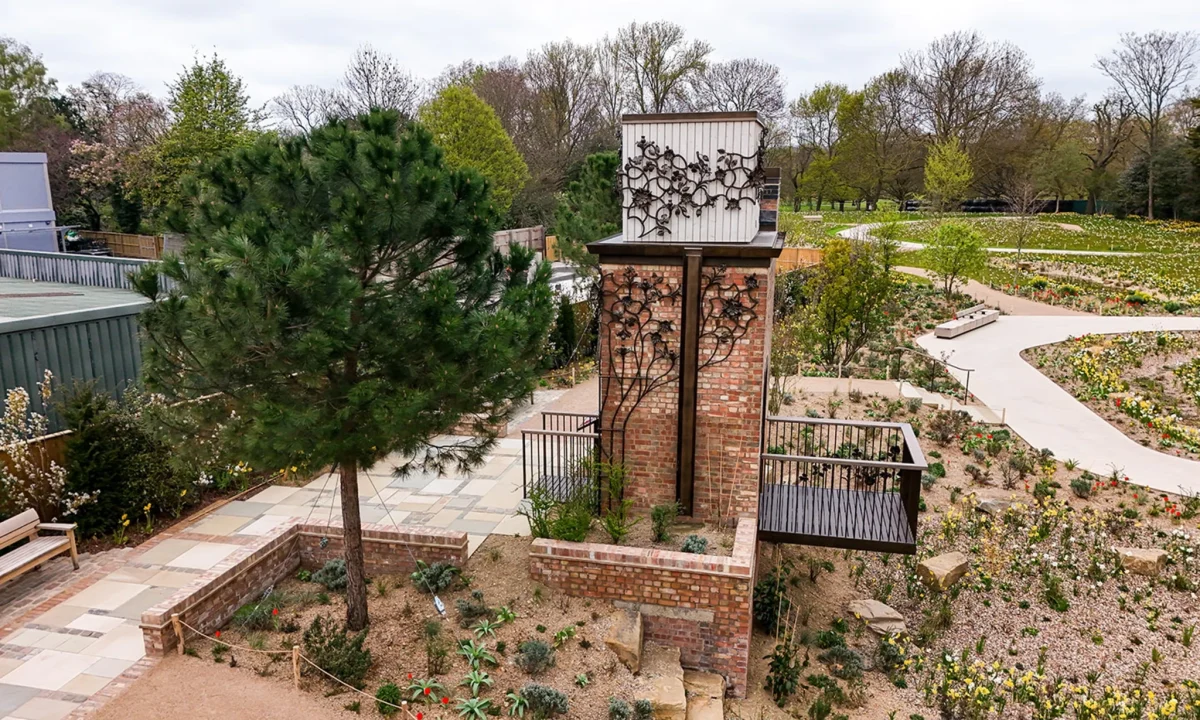
At the heart of the garden stands one of its most characterful features — a former water tower, reimagined as a contemporary folly.
Once a purely functional part of the old plant nursery, it has been given new life as a piece of living sculpture, connecting the garden’s past with its present.
What makes it truly special is the ornate decorative metalwork that adorns its exterior, crafted by Ian Thackray, a traditional blacksmith and alumnus of the King’s Foundation. Look closely and you’ll find four familiar motifs woven into the design: the thistle of Scotland, the leek of Wales, the shamrock of Northern Ireland, and the rose of England — a quiet but heartfelt tribute to the four home nations that Queen Elizabeth II served throughout her reign.
Surrounded by wildflowers and framed by the garden’s naturalistic planting, the tower is a place to pause and look up. In this busy time, it is a reminder that even the most practical of structures can be transformed into something beautiful, meaningful, and enduring.
Accessibility
The garden has four entrances and has been designed to be usable by, and welcoming to, as many people as possible regardless of age, ability or background.
Entrances are open, inviting and unimpeded by gates or physical obstructions during opening hours. The main path is even and level, generous in width, and visually contrasts with the surrounding planting. Passing and turning places, along with seating, are incorporated at regular intervals. Spaces are provided next to seats for wheelchair users, buggies and mobility scooters.
Upgraded, fully accessible toilet facilities, including a Changing Places toilet, are located near the main entrance.